Claude Design Released by Anthropic Labs
Claude Design is redefining the boundaries of the design industry. This AI tool not only automates prototype and PPT generation but also delves into the core of design systems—reading codebases, learning brand guidelines, and applying design rules in bulk. As AI begins to take over standardized tasks in the design process, how will designers’ value be restructured? This article will deeply analyze this seismic shift in the design industry.
The Impact of Claude Design on the Design Industry
The official description sounds promising:
make prototypes, slides, and one-pagers by talking to Claude
In simpler terms, it means:
You tell Claude what you need, and it helps you create prototypes, PPTs, and one-pagers.
However, the most significant aspect is not just its ability to generate images. According to the information released, Claude Design tells a larger story:
- Reading your codebase
- Reading your design files
- Helping you build your team’s design system
- Automatically applying this system to projects
- Ensuring brand consistency and output uniformity
In essence, it aims to take over not just a single design task but the entire design process itself.
When I first saw this product, my immediate reaction was not one of awe but a familiar thought: The design industry has once again been sentenced to death.
The Market Reaction: Figma’s Stock Drops
There’s a rather absurd trend: whenever AI begins to touch design—whether it’s creating images, prototypes, UI, design systems, or collaboration processes—Figma’s stock tends to drop.
It’s as if the market is preemptively mourning the entire design industry.

The logic behind this is straightforward: in the eyes of capital and the public, design has always been seen as the easiest area to be toolified. Many people’s understanding of “design” often isn’t design at all, but rather:
- Creating layouts
- Typography
- Using components
- Adjusting styles
- Producing several design options
- Making a visually appealing draft
Thus, every time AI announces,
“I can create slides now,” “I can make prototypes now,” “I can read your design files now,” “I can help you implement design systems now,”
the market automatically infers: What use is there for designers?
So when Figma drops, it’s not just the stock price that falls. It reflects an industry sentiment: People assume design will be the first role to be thinned out by AI.
The True Threat of Claude Design: System Integration
Honestly, if Claude Design were merely a “tool that generates pages,” I wouldn’t be as concerned. There are already many such tools available. What makes this situation different is that it is moving from “generating single results” to “taking over design rules.”
These are two entirely different stages. The former is simply about generating outputs; the latter involves:
- Understanding how your team currently designs
- Summarizing your brand and guidelines
- Generating outputs in bulk according to these guidelines

Once AI starts doing this, it’s not just replacing a “specific design action”; it’s taking over a significant part of many design teams’ core daily work:
- Organizing design systems
- Maintaining brand consistency
- Applying guidelines across different pages and materials
- Ensuring that product, marketing, and content outputs look like they come from the same company
This is where many designers should be genuinely cautious. It’s not just nibbling at the edges; it’s attempting to slice through the most stable, standardized, and scalable parts of the design process.
Is Design Really Finished?
I believe the answer is: Design isn’t finished, but the ability to “work with Figma” is becoming less valuable.
This statement may sound harsh, but I think it’s quite realistic. The first roles to be disrupted will definitely be those that rely heavily on execution:
- Low-barrier UI layout
- Template application
- Basic prototype building
- Moving pages within guidelines
- Rapid visual draft generation
- Bulk production of brand materials
These tasks are already highly process-driven.
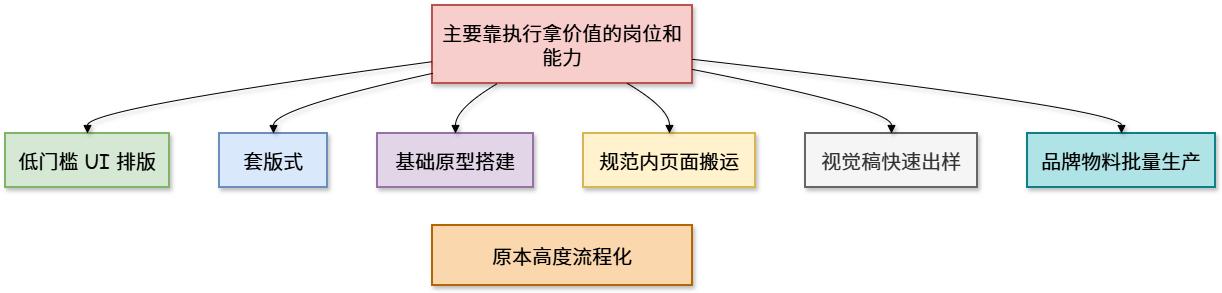
AI, with a bit more context and system integration, will quickly take over these tasks. So it’s not that “design is being replaced”; rather, the most labor-intensive aspects of design are being rapidly compressed.
The Future of Designers: A Split in Roles
I increasingly feel that the future of designers will split into two types:
The first type will find it increasingly difficult.
The second type will become more valuable.
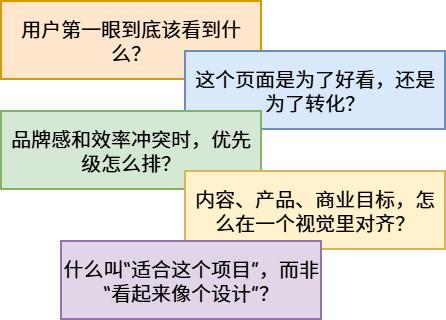
The distinction lies not in who can draw better, but in who can make better judgments. AI can quickly generate a page for you, but it inherently cannot decide:
- What should the user see first?
- Is this page meant to be visually appealing or to drive conversions?
- When brand aesthetics and efficiency conflict, how should priorities be set?
- How should content, product, and business goals align visually?
- What does it mean for something to be “suitable for this project” rather than just “looking like a design”?
You’ll find that what’s truly scarce is not the ability to produce designs but the ability to:
Judge what’s worth doing and determine what’s right.
Thus, the valuable designer of the future may increasingly resemble a hybrid of these roles:
- Brand judge
- User experience translator
- Information architect
- Business and user alignment facilitator
- Aesthetic decision-maker
- Rather than merely a “design executor.”
A Harsh Reality for the Design Industry
The introduction of products like Claude Design will lead to a direct result: The stratification within the design industry will widen.
In the future, there will be a clearer divide:
One side will be those who are compressed.
Their value primarily comes from:
This group will undoubtedly face significant AI disruption.
The other side will be the more expensive individuals.
Their value will stem from:
- Judgment
- System capabilities
- Aesthetic stability
- Brand understanding
- Balancing business and user needs
This group will actually become more valuable.
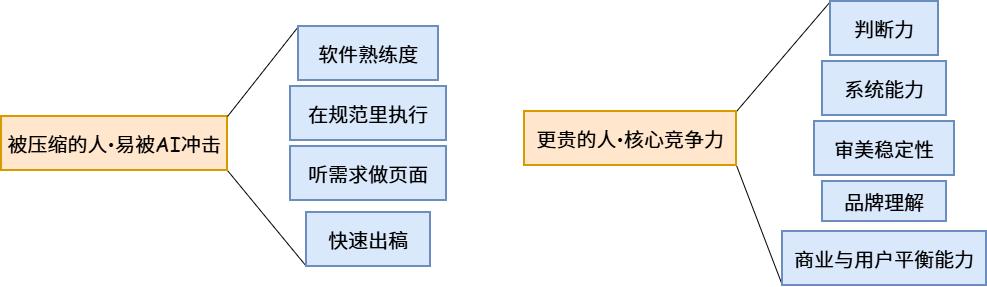
When everyone can “generate a decent page,” what truly matters is no longer speed, but:
Can you create something better?
The Emergence of Canva
With the release of Claude Design, Canva also announced its entry into the market.
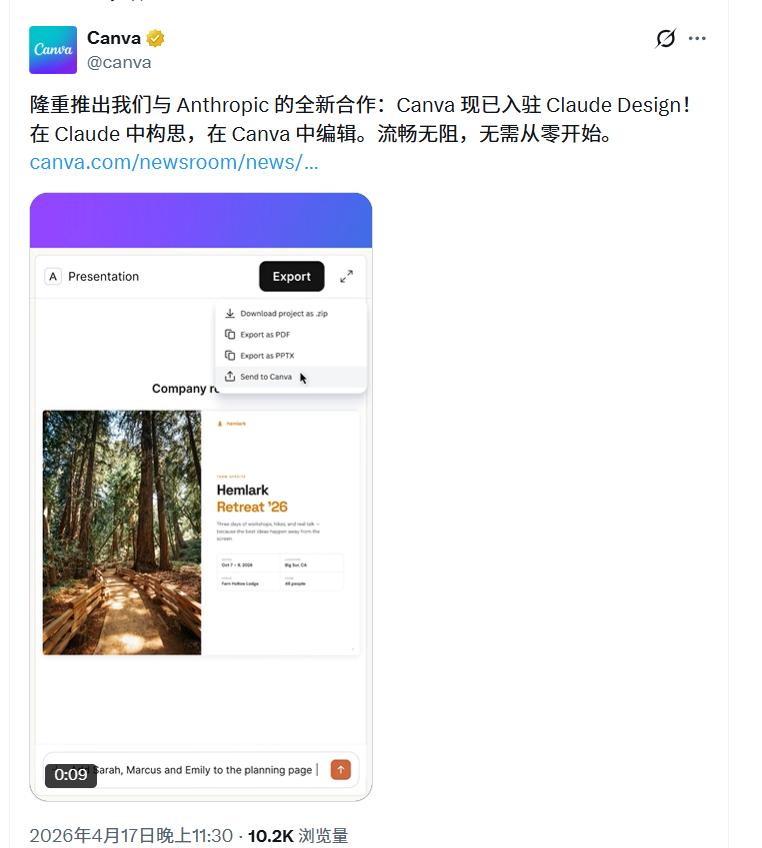
This is crucial information. It indicates that we are not just seeing one tool working alone; rather, a complete new content production chain is forming:
Claude is responsible for understanding needs, generating structure, and output direction, while Canva handles visual editing and rapid implementation.
Many of the “translation” and “execution” tasks that designers originally undertook are being removed.
This presents a stark reality: The real danger isn’t a single AI tool.
It’s the combination of AI + existing design tools + template systems + brand guidelines, which can adequately cover a large portion of mid-tier design needs.
Rethinking the Role of Designers
Every time a product like this emerges, people tend to fall into two extremes:
One group claims: Design is finished.
The other insists: AI doesn’t understand aesthetics and can’t replace designers.
I believe both perspectives are too simplistic. A more accurate statement would be: AI won’t eliminate design, but it will eliminate many “execution tasks masquerading as design value.”
This is the most brutal and realistic aspect.
So if today you still consider your core competency to be:
- I’m great at using Figma
- I’m skilled at assembling components
- I can produce several designs
- I’m adept at basic prototyping
Then, honestly, the danger has already begun.
But if you start to pivot towards:
- Stronger judgment
- Higher quality information organization
- Clearer brand expression
- Deeper user understanding
- Stronger system design capabilities
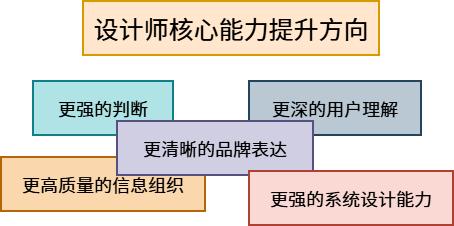
Then AI may actually make you more valuable.
After the release of Claude Design, my biggest takeaway isn’t “Wow, AI has progressed again,” but rather: The fragile values in the design industry are being stripped away layer by layer.
Every time AI starts doing design, Figma’s stock drops. This may seem humorous, but it clearly indicates: The market has never understood design primarily as “judgment” but rather as “production.”
Therefore, the most crucial task for real designers moving forward is: Don’t just be a producer anymore.
Comments
Discussion is powered by Giscus (GitHub Discussions). Add
repo,repoID,category, andcategoryIDunder[params.comments.giscus]inhugo.tomlusing the values from the Giscus setup tool.